For years my approach to health had 2 settings. Either I was all in, or I had written the week off and was planning to start again on Monday. What I didn’t do was look at the week in front of me and ask what each day could actually take.
These days I teach 4 to 5 BODYCOMBAT classes a week, alongside my consulting work and time with my kids. A teaching day and a rest day are not the same day, so it makes little sense to treat them as if they were. This post is about how I match training and food to the day I’m actually having, and how you can find your own pattern.
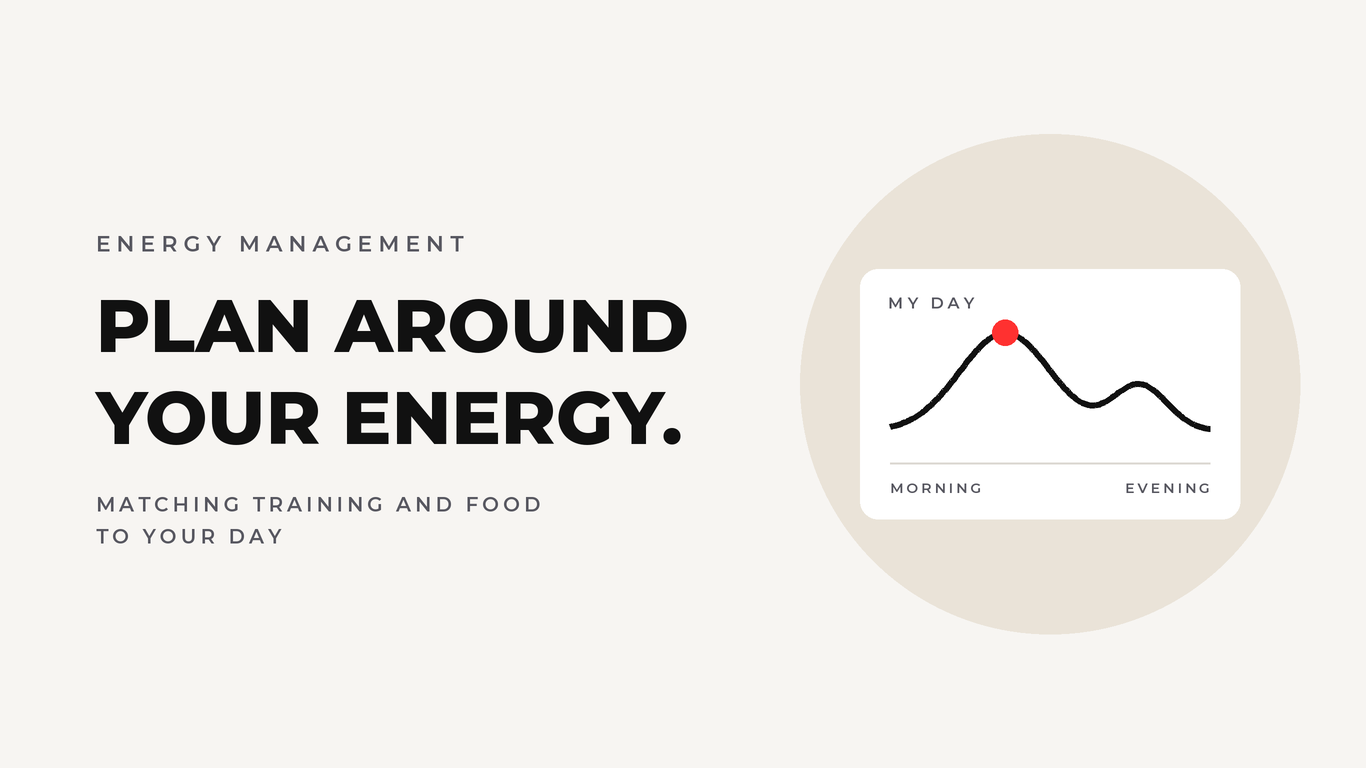
Not every day needs the same energy
Energy isn’t only physical. Teaching a class means being switched on from the first track to the last: the choreography, the people in front of me, the music, the cues. On top of that there’s work and family. Some days ask a lot. Others are quieter, and that is fine.
The change for me was to stop expecting every day to feel the same, and to plan around the difference instead. Every Sunday I look at the week ahead, put my workouts in the diary and batch cook. My key rest days are usually Monday, Thursday and Saturday, and I plan those just as deliberately as the busy days. I wrote more about that in Rest is part of the plan.
What a teaching day looks like for me
If I’m teaching early in the morning, I don’t eat anything beforehand. On a morning with 2 high energy classes, I’ll have an energy gel or a protein bar in between, along with a coffee. Otherwise I tend not to eat in the 3 hours before a class.
After a class it’s always protein, whether that’s a protein bar or 2 boiled eggs.
The thing that helps most on a busy day is not having to think about food at all. Because I’ve batch cooked on the Sunday, lunch is already sorted, and I’m not relying on whatever is quickest when I’m short on time. Making my own lunch was one of the first changes I made, and it is still one of the simplest ones I keep.
What a rest day looks like
A rest day isn’t a day off from looking after myself. It might include a walk, which was my first real step into fitness and is still one of the easiest ways I know to move without adding to the load. It is also a chance to catch up on sleep and let my body recover from the classes either side of it.
Food on a rest day is simple: I eat normally and I don’t overthink it.
The small things that protect my energy
None of these are exciting, which is probably why they work.
- A caffeine cut off. Mine is 1pm. After that it’s decaf if I’m craving one. It sounds boring, and it made a real difference.
- Sleep quality over a perfect number. I don’t get a neat 8 hours, so I track the quality of my sleep on my Apple Watch and pay attention to that instead.
- Food sorted before the week starts. A Sunday batch cook means the busiest days already have a plan.
- Time in the studio as a reset. A class is a workout, but it is also time where I’m not thinking about work or anything else. Energy is mental as well as physical.
How to find your own pattern
Your week will look different from mine, and that is the point. You don’t need a tracker or an app to start, just a few days of paying attention.
- Notice for 3 days. Jot down when you feel most awake and when you start to fade. Just notice, no targets yet.
- Put the hardest thing in your best window. If you’re sharpest in the morning, that is the time to protect for a workout or the task that matters most.
- Plan food for your busiest days first. Those are the days you’re most likely to grab whatever is quickest, so give them a plan before the week starts.
- Book your rest. A planned rest day doesn’t feel like failing. An unplanned one often does.
- Treat a flat day as a blip, not a restart. Low energy for a day doesn’t undo anything. Writing off the week does.
I’m a Les Mills BODYCOMBAT instructor and I’m studying nutrition with MNU, but I’m not a personal trainer or a qualified nutritionist. This is what works for me, not a plan for anyone else. If you have a health condition, take regular medication or often feel tired for no clear reason, speak to your GP or a registered professional.
If you’d like somewhere to start, my free Kickstart Your Fitness checklist has 10 small first steps, and you only need to pick 1.
This is my journey. Yours will be unique.