My story
From 127 kg to 82 kg, including the parts that didn’t go to plan
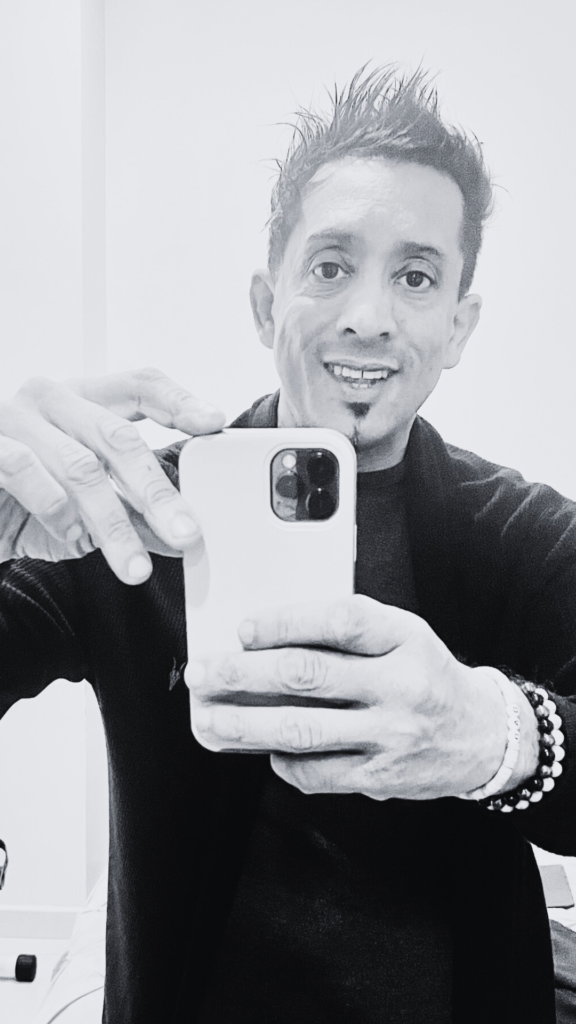
Hi, I’m Oz. I’m 50, I live in Kent, I work for myself as a business operations consultant and I’m a dad of 2. Over about 4 years I went from 127 kg to 82 kg. This page is the longer version of how that happened, including the parts that didn’t go to plan.
Chapter 1
Where I began
What’s strange looking back is that I never thought I had a problem. I lived the way that felt normal to me: I ate whatever was convenient, I didn’t think about how much I was moving, and I assumed feeling tired all the time was just part of life.
I did join gyms. Plenty of them. I was the person who woke up one day and decided that better eating and the gym would start tomorrow. At best it lasted 4 to 6 weeks. Then something else in life took priority, and once I’d stopped it took another jolt to get going again.
The jolt that finally stuck was my divorce. When we separated I was at my heaviest, 127 kg, and the time that followed was tough. I have 2 young children, and because we weren’t parenting well together, I saw them far less than I wanted to. That wasn’t my choice. Mentally I was holding on, but physically I was not in a good place. I spent hours watching YouTube videos about why I felt the way I did, and in the end it came down to something simple: nobody was going to fix this for me. If I wanted to rebuild my life, I had to start with the one thing I could control, which was my own health.
What I’d take from this: the scales aren’t the whole story, but being honest about where you’re starting makes it easier to see progress later.
Chapter 2
1 thing at a time
I started with the simplest thing I knew I could do, which was walking. My office was about 4.5 km from home and I’d always taken public transport because it got me there in 20 minutes. So I walked instead. The first few days it took me about an hour.
After a month I was walking to work and back 3 or 4 times a week. I could feel a difference within days: easier breathing, more energy and a clearer head. Walking also has the advantage that nobody judges you for doing it. It’s 1 step after another.
I think this is where a lot of us fall down. We want change so badly that we overhaul our food, start exercising hard, drink gallons of water and buy smaller clothes all in the same week, and then we can’t keep all of it going. What worked for me was doing 1 thing well until it felt normal and I could feel the benefit, and only then adding the next.
What I’d take from this: choose 1 change you could still manage on a bad day, and give it a few weeks before adding another.
Chapter 3
Changing how I ate
Walking got me moving, but food is where most of the change came from. I had never really understood nutrition. I’d heard the usual bits about cutting carbs and doing cardio, but I had never questioned what was true or what worked for me.
So I paid for help and worked with a nutritionist. They gave me focus on what I could eat and when, in a way that fitted my lifestyle, with simple changes that actually worked. It made me realise very quickly that information was everything. From there the changes that made the biggest difference were:
- Making my own lunch instead of buying whatever was nearby at work. Meal prep became a big part of my week.
- Drinking more water and tracking how much I was having.
- A caffeine cut off: no tea or coffee after 12pm.
I don’t follow a named diet. These were changes I could keep up week after week, which mattered more to me than any quick result.
Later on, in 2024, I went vegetarian, and I don’t eat fish either. It turned out to be more than just cutting out meat. At first I wasn’t eating enough and my energy dropped during workouts, so I had to plan my protein properly and lean on meal prep and my slow cooker. I’ve written about how that went in my vegetarian journey.
What I’d take from this: if food is the area you know least about, getting proper guidance early can save a lot of guesswork. A registered dietitian or nutritionist is the right person for individual advice.
Chapter 4
The hard parts
Walking into the gym. Once walking felt normal, I joined a local 24 hour gym, one of the £30 a month ones. My biggest fear was obvious the moment I walked in. It was full of big, confident lads, and I felt like I was stepping into their space. Some of that was my own paranoia, but the intimidation was real to me.
Rather than quit, I paid for a personal trainer twice a week for a month. We mostly trained in the park at 7 or 8am, when the only other people around were joggers going past. He helped me find my level and push myself, but the most useful thing he gave me was a routine. With the walking, 2 sessions with him and a couple of gym visits each week, I was doing something almost every day, and that felt good.
Finding the time. Everything had to fit around my consulting work and being a dad. After the divorce I trained on the days I didn’t have the children. On the other days walking kept me moving, and over time I started going to more classes, BODYPUMP for example. Some weeks also meant early starts, and I’ve written about how waking up at 4am changed things for me. Gym and class time became my mental reset as much as my exercise.
What I’d take from this: feeling out of place is common, and it usually eases with a plan. A short burst of help to build a routine can be worth more than months of trying alone.
Chapter 5
From the back row to the front
I found Les Mills BODYCOMBAT as a participant and kept going for about 2 years. It became more than exercise. It was an outlet and a way to push through mental barriers as well as physical ones. In August 2024 I qualified as an instructor, and I’ve now taught over 400 classes.
It hasn’t been a straight line. In 2025 I had surgery on my shoulder and had to hand over classes while I recovered. I’ve written about what that taught me about rest and patience. I still go to other classes as a participant, BODYPUMP for example, but BODYCOMBAT is the only class I teach.
What I’d take from this: the thing you’re nervous about now might become something you love. Setbacks are part of it, not the end of it.
Chapter 6
Where I am now
Today I weigh 82 kg and I teach BODYCOMBAT 4 to 5 times a week. I’m also studying with MNU to become a nutritionist, so I can understand the reasons behind what worked for me and share it more accurately. Until I qualify I’m not a nutritionist, and I’m not a personal trainer, so what I share is my experience and what I’m learning, not a plan for you to follow.
These days my focus is maintenance rather than losing weight. I’m still working on my food and nutrition, on keeping a balance between work, family and training, and on fitting in more strength training when I can.
Where to go next
If you’re starting now, or starting again
If you recognise yourself in any of this, these posts are a good place to begin: what made me start, one bad day of eating does not mean you have failed and batch cooking.
If you’re curious about the kit I use day to day, I’ve put it all on one page: what I use.
This is my journey. Yours will be unique.
Oz